
Abstract:
Major depressive disorder (MDD) is one of the leading causes of disability worldwide. Globally, an estimated 5.7% of adults suffer from depression (about 280 million people Women suffer from depression more often than men — the lifetime risk is 20-25% for women and 7-12% for men.
The losses of the global economy due to reduced productivity during the depression exceed $1 trillion annually.
Depression prevalence varies notably by nation. High Burden Regions: approximately 5.4 million people (roughly 3.8%) in Russia live with depressive disorders. Prevalence estimates vary widely; while official clinical diagnoses are lower, localized population screenings and the World Health Organization indicate that up to 14% - 25% of the general public may experience subclinical or clinical depressive symptoms. Countries in Australasia, Western Europe (e.g., The Netherlands, Portugal, and Australia), and high-income North America often report the highest lifetime prevalence rates, ranging between 10% and 17%.Mid-range countries: Many countries, including Canada, The United States, and Brazil, fall within an 8% to 10.4% lifetime prevalence range. Lower reported Rates: Asian countries, such as Taiwan, Japan, and China, historically report lower numbers of cases (between 1.1% and 3%), which researchers partially attribute to cultural differences in symptom reporting and clinical evaluation.
The complexity of the care of patients with depression is determined by the fact that there are currently no objective (instrumental) or laboratory tests for the diagnosis of depression. . In practical work, doctors are limited to information within the framework of verbal contact with the patient. This fact is reflected in the mosaic of clinical signs of patients with depression, where for F32 (depressive episode) there are 13 variants of the clinical course, and for F33 (recurrent depressive disorder) - 14.
The analysis of medical records of inpatient patients with diagnoses attributed to three groups of depressive disorders was performed: 1) exogenous (organic): F.06.0, F.06.3, F.06.329, F.06.36, F.06.378, F.06.4, F.06.49, F.06.61, F.06.68, F.06.8, F.06.828, F.06.83, F.07.08, 2) endogenous: F.20.9, F.21.3, F.31.3, F32.0, F32.00, F.32.01, F.32.1, F.32.10, F.32.11, F.32.2, F.32.3, F.32.30, F.32.33, F.32.34, F.33.0, F.33.00, F.33.1, F.33.10, F.33.11, F.33.2, F.33.33, F.33.8, F.33.9, F.34.0, 3) psychogenic (stress-related): F.41.2, F.43.21, F.43.22, F.48. All patients were treated in inpatient departments of the Republican Clinical Psychiatric Hospital. of the Ministry of Health of the Republic of Tatarstan in the period from 2000 to 2022. Clinical signs were identified according to clinical recommendations developed by the Russian Society of Psychiatrists (2024). A group of patients with effective treatment was identified. From the general list of clinical signs recommended for identification in the diagnosis of major depressive disorder, no sign was identified that occurs in 100% of clinical observations. The clinical sign of "disturbed sleep" occurs with a frequency of more than 50%. In the group of patients with a single hospitalization with a frequency of more than 50% there was a clinical sign of "low mood". The results obtained prove the need to develop technologies for objective diagnosis of BDR using positron emission tomography and magnetic resonance imaging with high-resolution spectroscopy.
Biography:
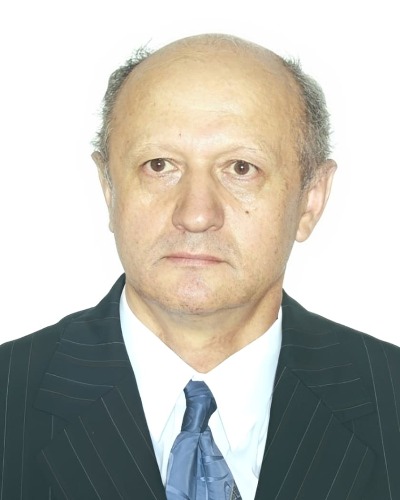
Professor Rustem Frunzevich Baikeev (PhD, Doctor of Medical Sciences) is a Professor in the Department of Biochemistry and Clinical Laboratory Diagnostics at Kazan State Medical University, Russia. He earned his medical degree from Kazan State Medical University in 1980 and completed degrees in physics and mathematics at Kazan State Federal University in 1986. His research focuses on human metabolism at the organism, tissue, cellular, molecular, and atomic levels under both normal and pathological conditions. He specializes in advanced imaging and analytical techniques, including MRI, fMRI, PET, magnetic resonance spectroscopy, EEG, ECG, electromyography, biochemical methods, and mathematical analysis. His current research in psychiatry investigates the molecular mechanisms underlying major depressive disorder (MDD) and suicide. He was also affiliated with Harvard University, USA, from 2001 to 2003.
© 2026 Mathews International LLC. All rights reserved.
